⚛ QUANTUM LAB
Interactive Physics Simulations — KNUST Department of Physics
🎯 Objective
Explore the concept of uncertainty in quantum mechanics by investigating probability distributions using dice simulations. Understand how standard deviation quantifies uncertainty.
🧪 Interactive Dice Simulation
📝 Questions
- What happens to the distribution shape as you increase the number of rolls? The distribution approaches a bell-shaped curve centered at 7 (the most probable sum).
- Why is 7 the most common sum? There are more combinations that sum to 7 (6 ways) than any other number.
- How does the standard deviation change with more rolls? It converges to the theoretical value (~2.42), becoming more stable.
- What does this tell us about quantum uncertainty? Quantum uncertainty reflects inherent indeterminacy, not just lack of knowledge. The outcome doesn't exist in a definite state until measured.
🎯 Objective
Explore how waves interact and create interference patterns — the key to understanding quantum behavior.
📝 Observation Table — Wave Behavior
| Condition | Pattern Observed |
|---|---|
| One source | Concentric circular ripples, no interference |
| Two sources, in phase | Alternating bright/dark bands (interference fringes) |
| Three sources | More complex pattern with sharper maxima |
🧠 Key Insight
When two waves overlap, they can add constructively (bright) or destructively (dark). This interference pattern is the hallmark of wave behavior — and it's exactly what electrons and photons also exhibit!
🎯 Objective
Simulate the famous double-slit experiment with photons and electrons, observing how single particles build an interference pattern over time.
📝 Questions
- What pattern appears when two slits are open? An interference pattern of alternating bright and dark fringes appears.
- What's surprising about sending electrons one at a time? Even one at a time, they build the same interference pattern — suggesting each electron interferes with itself.
- What does this reveal about quantum particles? Particles like electrons exhibit wave-particle duality — they behave as waves until measured.
🎯 Objective
Investigate how light ejects electrons from a metal surface — the experiment that proved light behaves as particles (photons).
📝 Observation Table
| Color | Wavelength | Frequency | Electrons Ejected? |
|---|---|---|---|
| Red | ~700 nm | Low | — |
| Green | ~530 nm | Medium | — |
| Blue | ~470 nm | High | — |
| Violet | ~400 nm | Very High | — |
🧠 Key Concept
The photoelectric effect proves light is made of particles (photons) because increasing intensity doesn't help if the frequency is too low. Energy comes in discrete packets (quanta) — each photon must have enough energy to eject an electron.
 Cosine Physics — Wave function visualization
 COS — Trigonometric relationships
 MCP — Monte Carlo simulation results
 Dice Frequency — Raw frequency distribution
 Dice Frequency — Solved analysis
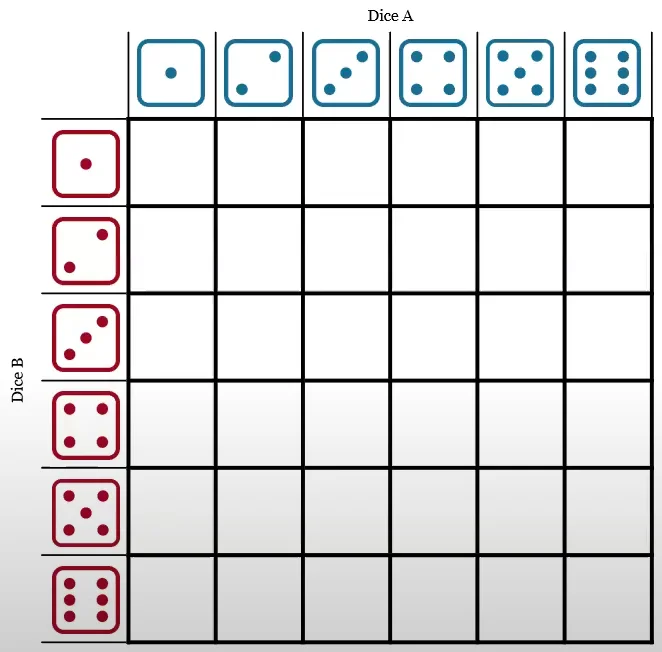 Dice Probability Table — Raw data
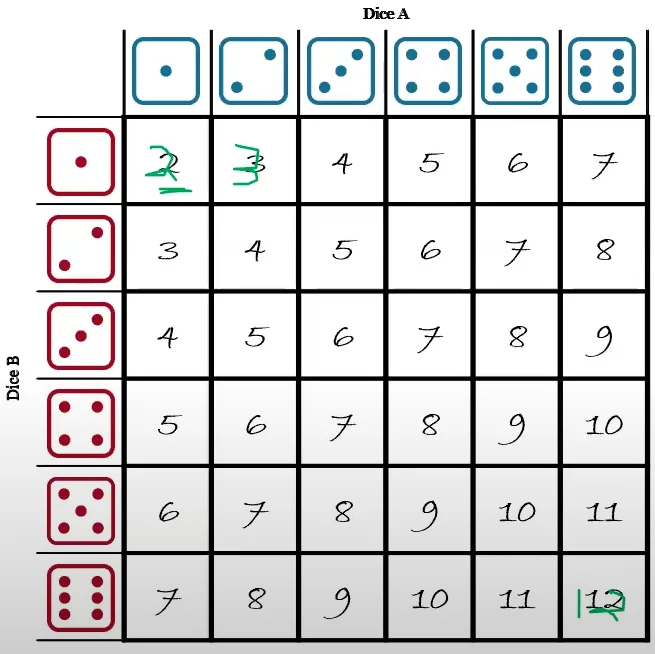 Dice Probability Table — Solved
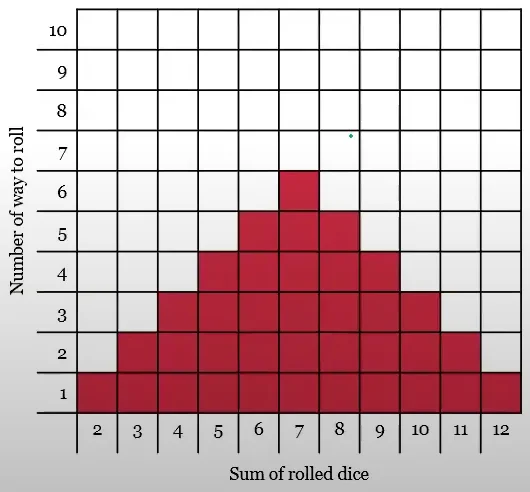 Dice Histogram — Visual distribution
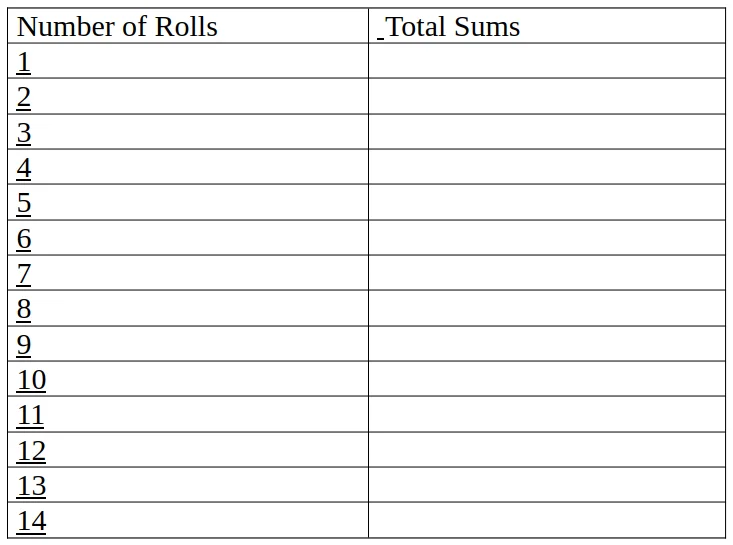 Sum Total — Aggregate statistics
 Department & University Logos